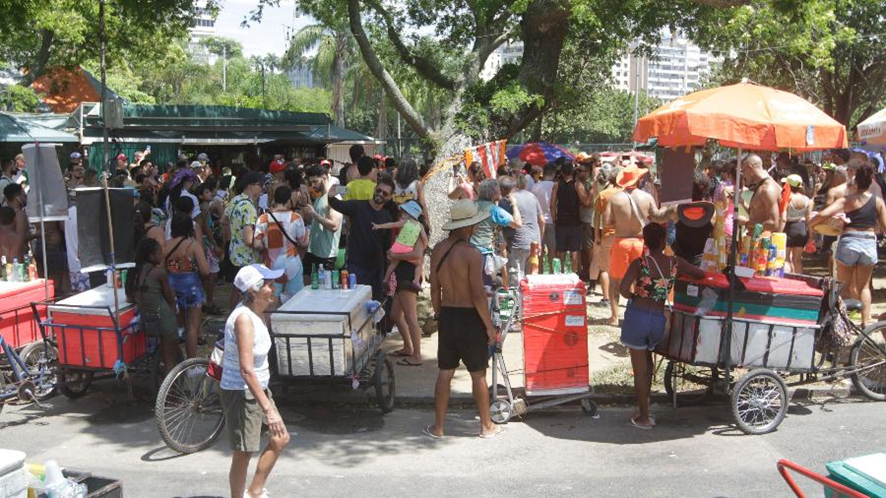
Since carnival is coming back to Brazil this year and, in my hometown of Recife, is being sponsored by the multinational brewing company AmBev, here are some facts about beer in Brazil.
- The AmBev beverages company has paid Recife City Hall 3.8 million Brazilian reais to be the official sponsor of this year’s Carnival in the city. This means, in principle, that only brands of beer produced by this company can be sold at Carnival-related events.
- The term frevo used to refer to the frenetic dance and style of brass-band music associated with carnival in Recife dates back to 1906.
- As a nation, Brazil is the third largest consumer of beer in the world, accounting for around 6.6% of the global market in 2013. This is largely because of its huge population of around 214 million and a culture that is broadly tolerant of, if not enthusiastic about, alcohol consumption and inebriation.
- 70% of the beer drunk in Brazil is produced by one company, AB-InBev (often still referred to by its original name AmBev). This company is also the largest brewing company in the world, created by a merger of a Belgian and Brazilian company and the takeover the US company Anheuser-Busch. Almost all the brands of beer you see regularly in Brazil (Antarctica, Bohemia, Brahma, Budweiser, Corona, Skol, Stella Artois) are owned by this one company. The company was founded by the trio of Brazilian billionaires responsible for the 3G investment group. This group still owns substantial holdings in the company and is also involved in the now bankrupt chain of department stores Lojas Americanas
- 4% of all the beer drunk annually in Brazil is consumed during the four days of Carnival—the Saturday, Sunday, Monday and Tuesday before Ash Wednesday, which falls in February or March each year on a date that depends on the date of Easter, forty days later.
- Carnival means ‘good bye to meat’ in Latin and was a originally a feast celebrating the beginning of the period of abstinence known in the Catholic tradition as Lent. It has undergone various changes over the years under the influence of African and indigenous traditions in Brazil.
- Per capita consumption of beer in Brazil is not exceptionally high, but the country still ranks 28th in the world. This is probably because poverty means that many cannot afford the luxury of alcoholic beverages or drink cheaper alternatives, such as the Brazilian white rum called ‘cachaça’ or ‘aguardente’ (burning water).
- Average per capita consumption of alcohol in Brazil rose from 6.2 liters of pure alcohol per person to 8.7 liters in the ten years between 2006 and 2016, This has occurred despite the huge increase in members of Protestant Evangelical churches (from 5% to 22% of the Brazilian population in the forty years between 1970 and 2010 and up to 31% in 2016)—a group that historically abstains from alcohol consumption in Brazil.
- The tax on beer in Brazil is 6%, a rate lower than that levied on everyday products such as shampoo, deodorant, and bricks.
- It is traditional, especially among the less privileged sectors of the Brazilian population, to celebrate Sundays (the only day free of work for many workers) with noisy street parties and drinking. This is known as the “domingão”—‘the big Sunday’.
- While AmBev this year is sponsoring the Carnival in Recife, the Mayor of Olinda – a city adjoining Recife famous for its street carnival—has made the opposite decision, banning the sale of AmBev products during carnival in favor of other brands.
 Poetry, Politics and Language