Though turned through metathesis from Old English ‘thurgh’ (þurȝ) to ‘through’ and stripped of its original thorn þ and yogh ȝ, the word ‘through’ has not been through that many changes over the years.
If we are to believe the etymologists who derive it from a Proto-Indo-European verb *tere– meaning ‘cross over’ or ‘pass through’, it is cognate with Latin ‘trans,’ though not, sadly, with the tre- prefix found so charmingly in many Cornish place names. Which, incidentally, refers to a mere farmstead, cognate with the Old Norse -thorpe in Scunthorpe and Cleethorpes, Welsh tref, and German Dorf.
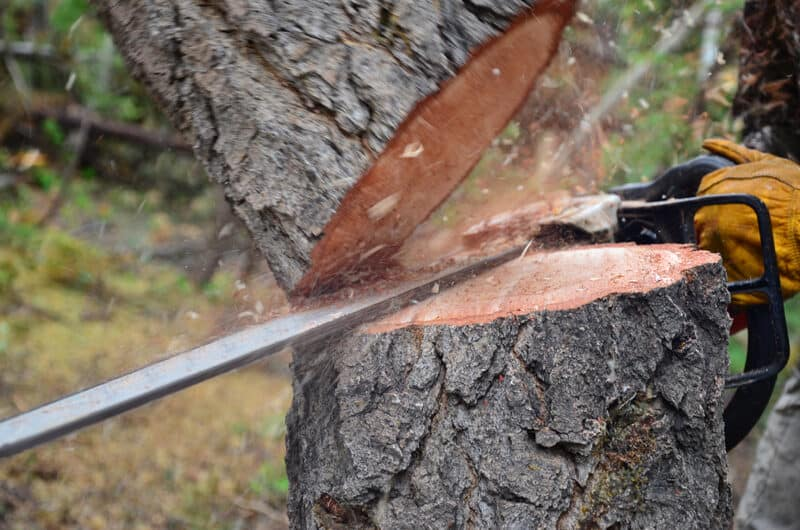
The modern meaning of the adjective ‘thorough’—surely one of the finest English words both in form and sense precisely because its sense and form so drastically fail to come together—derives from the idea of passing or cutting all the way through. That sense of sudden satisfaction when a saw severing a trunk meets the air on the other side with a jolt and the tree tumbles earthwards with a crack and a thump.
We still use ‘through’ colloquially in this sense of ‘had enough’. As in the schoolmasterly “I’m through with you!” Or in the sense of ‘finished,’ with a slightly menacing overtone. Who knows what they might do when they are “through with you?”
Despite the daunting appearance they present to a learner of English, the meanings of words such as ‘thoroughfare’ and ‘thoroughgoing’ are in fact refreshingly transparent, meaning exactly what they say. Their prickly appearance is perhaps nothing but a cheeky reminder that by no means all the many layers of a language are or can or should be so easy to see through in this way.
And then there are the completely unrelated words ‘thought,’ and ‘though,’ and ‘tough,’ with which the twin-words ‘through’ and ‘thorough’ are wont to hang out, and for whom they are even mistaken once in a while. A little knot of friends all the more tightly knit for having so little in common. Setting a good example for us all.
And should anyone be misled into thinking that ‘through’ is an old-fashioned word that must surely be dying out, I refer them to the drive-thru of the local fast-food outlet and urge them not to be deceived by the newfangled spelling, which, apart from this instance, has never really caught on.
‘Through’ is far from through with us yet.
 Poetry, Politics and Language